Oven Baked BBQ Ribs
This recipe is designed for Quick Meal Daily and is written as a complete, ready-to-publish food blog post. It includes an engaging introduction, detailed instructions, cooking tips, FAQs, serving ideas, storage guidance, and a recipe card.
The recipe uses pork baby back ribs, a flavorful homemade dry rub, foil-baking for tenderness, and a sticky barbecue glaze. The wording and presentation are original rather than copied from the competitor.
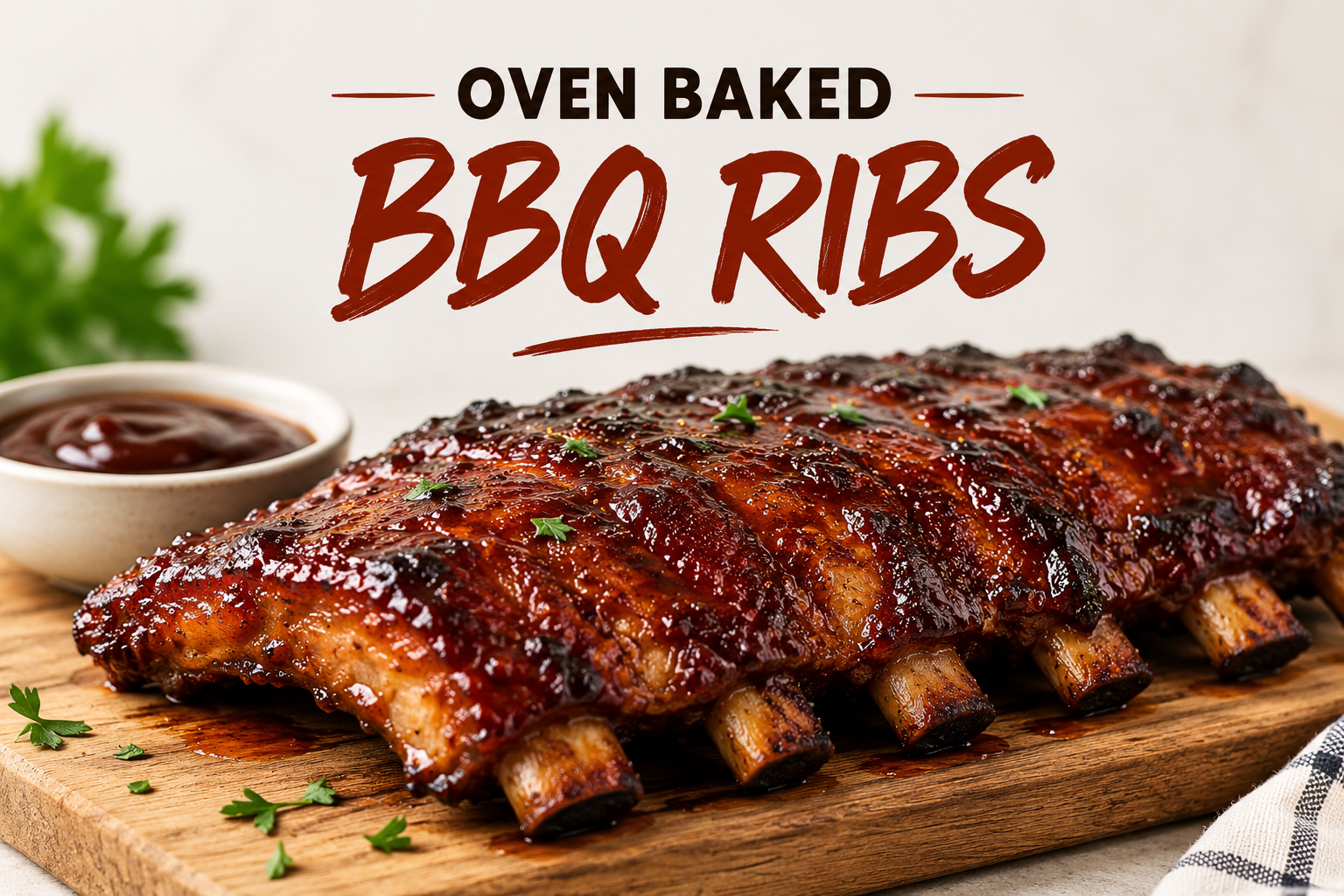
Oven Baked BBQ Ribs
Tender, juicy oven-baked ribs with a smoky homemade rub and a sticky, caramelized barbecue glaze. This easy rib recipe delivers delicious barbecue flavor without needing a smoker or outdoor grill.
There is something special about a rack of ribs fresh from the oven. The meat becomes tender, the seasoning creates a flavorful crust, and a generous coating of barbecue sauce adds a sweet, tangy finish. Best of all, you can make these ribs in your own kitchen with a baking sheet, aluminum foil, and a handful of everyday ingredients.
This oven-baked ribs recipe uses a low-and-slow cooking method to help soften the meat before finishing it with a glossy barbecue glaze. Whether you’re preparing a weekend dinner, a family barbecue-style meal, or a comforting Sunday feast, these ribs are an easy way to bring big flavor to the table.
Serve them with creamy coleslaw, crispy roasted potatoes, baked beans, or buttery cornbread for a satisfying meal everyone will enjoy.
Save this recipe for your next barbecue night!
Why You’ll Love These Oven Baked Ribs
- No smoker required: Make tender barbecue-style ribs using your regular oven.
- Rich, smoky flavor: A homemade spice rub adds depth to every bite.
- Tender and juicy: Baking the ribs covered helps retain moisture during the cooking process.
- Sticky barbecue glaze: A final blast of high heat creates a delicious, glossy finish.
- Easy preparation: Most of the cooking time is hands-off.
- Perfect for gatherings: A rack of ribs makes a hearty main course for family dinners and casual celebrations.
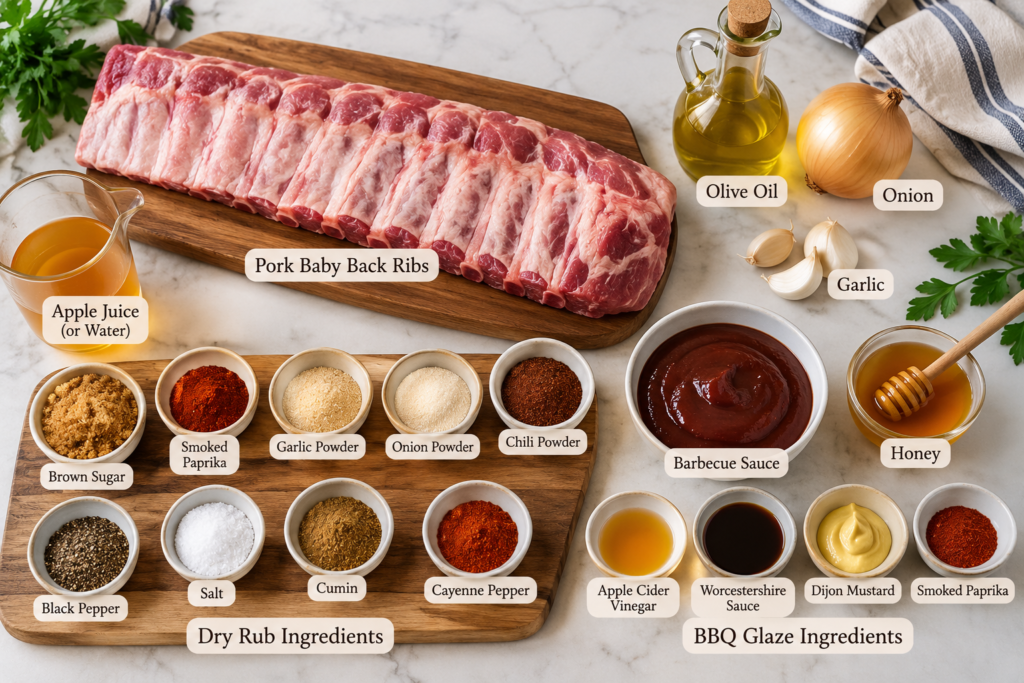
Ingredients You’ll Need
You only need a few simple ingredients to make these flavorful oven-baked BBQ ribs.
For the Ribs
- 3 pounds pork baby back ribs
- 1 tablespoon olive oil
- 1 medium yellow onion, sliced
- 4 garlic cloves, lightly crushed
- ¼ cup apple juice or water
For the Homemade Dry Rub
- 2 tablespoons brown sugar
- 1 tablespoon smoked paprika
- 2 teaspoons sweet paprika
- 2 teaspoons garlic powder
- 1 teaspoon onion powder
- 1 teaspoon chili powder
- 1 teaspoon ground black pepper
- 1½ teaspoons kosher salt
- ½ teaspoon ground cumin
- ¼ teaspoon cayenne pepper, optional
For the BBQ Glaze
- ¾ cup barbecue sauce
- 2 tablespoons honey
- 1 tablespoon apple cider vinegar
- 1 tablespoon Worcestershire sauce
- 1 teaspoon Dijon mustard
- ½ teaspoon smoked paprika
Ingredient Notes and Substitutions
Baby Back Ribs
Baby back ribs are a great choice for this recipe because they are relatively compact and have a curved shape. You can also use St. Louis-style spare ribs, but they are generally meatier and may require additional cooking time.
Brown Sugar
Brown sugar adds sweetness to the spice rub and helps create a flavorful crust. If you prefer a less sweet recipe, reduce the amount slightly.
Smoked Paprika
Smoked paprika gives the ribs a subtle smoky flavor, which is especially useful when cooking indoors without a smoker. Regular paprika can be used if you prefer a milder flavor.
Apple Juice
Apple juice adds a little sweetness and moisture to the covered baking environment. Water works just as well if you don’t have apple juice available.
Barbecue Sauce
Use your favorite bottled barbecue sauce or homemade sauce. A smoky, sweet, tangy, or spicy variety can work depending on your taste.
Honey
Honey helps the glaze become glossy and sticky. You can substitute maple syrup or use an extra tablespoon of brown sugar.
Important: Because the glaze contains sugar, watch the ribs carefully during the final broiling stage to prevent burning.
How to Make Oven Baked Ribs
Step 1: Prepare the Oven
Preheat your oven to 275°F (135°C).
Line a large rimmed baking sheet with heavy-duty aluminum foil. You can also place a sheet of parchment paper beneath the ribs if desired, but make sure it is suitable for the oven temperature and does not come into contact with the broiler.
For easier cleanup, use a second sheet of foil to cover the ribs later.
Step 2: Remove the Membrane
Place the ribs on a clean cutting board with the bone side facing upward.
Look for the thin, silvery membrane covering the back of the rack. If it is still attached, slide a small butter knife underneath one edge to loosen it.
Grip the loosened membrane with a paper towel and pull it away from the ribs. If it tears, continue working in smaller sections until most of it has been removed.
Removing this membrane helps the seasoning reach the meat and improves the texture of the finished ribs.
Pat the ribs dry with paper towels.
Step 3: Mix the Dry Rub
In a small bowl, combine:
- Brown sugar
- Smoked paprika
- Sweet paprika
- Garlic powder
- Onion powder
- Chili powder
- Black pepper
- Salt
- Cumin
- Cayenne pepper, if using
Stir until the spices are evenly distributed.
The mixture should smell smoky, savory, and slightly sweet.
Step 4: Season the Ribs
Lightly brush both sides of the ribs with olive oil.
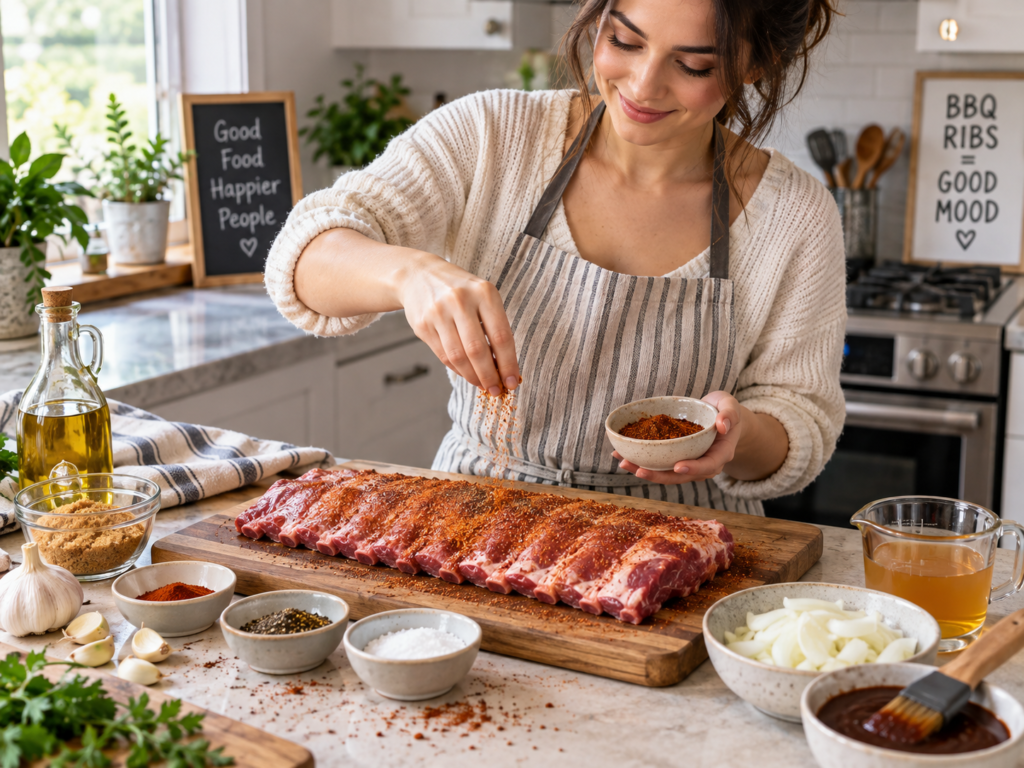
Sprinkle the dry rub generously over the meat, then gently press it into the surface so it adheres.
Make sure to season both the meat side and the bone side.
For deeper flavor, allow the seasoned ribs to rest in the refrigerator for 1 to 4 hours before cooking. If you’re short on time, you can bake them immediately.
Step 5: Arrange the Ribs for Baking
Place the sliced onion and crushed garlic on the prepared baking sheet.
Arrange the ribs over the aromatics, meat side facing upward.
Pour the apple juice or water into the bottom of the pan, taking care not to wash the seasoning off the ribs.
Cover the entire baking sheet tightly with aluminum foil. Crimp the edges firmly to help retain moisture during cooking.
Do not leave large openings in the foil.
Step 6: Bake the Ribs Until Tender
Place the covered baking sheet in the preheated oven.
Bake for approximately 2½ to 3 hours, depending on the thickness of the ribs and how tender you want them.
Begin checking after 2½ hours.
The ribs are ready for the glazing stage when:
- The meat has visibly pulled back from the ends of the bones.
- A toothpick or thin knife slides between the bones with little resistance.
- The rack bends easily when lifted carefully with tongs.
- The meat feels tender rather than firm or springy.
If the ribs are still tough, cover them again and continue baking for another 20 to 30 minutes before checking.
Remember: Cooking time is a guide. The tenderness of the meat is a better indicator than the clock alone.
Step 7: Prepare the BBQ Glaze
While the ribs are cooking, combine the following ingredients in a small saucepan or bowl:
- Barbecue sauce
- Honey
- Apple cider vinegar
- Worcestershire sauce
- Dijon mustard
- Smoked paprika
Stir until smooth.
If using a saucepan, warm the mixture over low heat for 2 to 3 minutes, stirring occasionally. Do not allow it to boil vigorously.
Taste the glaze and adjust it to your preference:
- Add more honey for sweetness.
- Add more vinegar for tanginess.
- Add hot sauce or cayenne for heat.
- Add a little extra barbecue sauce for a thicker coating.
Step 8: Glaze the Ribs
Once the ribs are tender, carefully remove the baking sheet from the oven.
Be cautious when opening the foil because hot steam may escape.
Discard the onion, garlic, and excess cooking liquid.
Transfer the ribs to a clean foil-lined baking sheet or broiler-safe pan.
Brush a generous layer of barbecue glaze over the meat side of the ribs.
For an even richer finish, turn the ribs over and brush the bone side as well.
Step 9: Broil Until Caramelized
Turn your oven’s broiler to high and allow it to preheat.
Place the glazed ribs several inches beneath the broiler.
Broil for approximately 2 to 5 minutes, watching them continuously.
The glaze should become shiny, bubbly, and lightly caramelized around the edges.
Because barbecue sauce and honey contain sugar, the glaze can burn quickly. Do not walk away during this step.
For an alternative finish, place the baked ribs on a preheated grill over medium-high heat and cook briefly until the sauce develops light char marks.
Step 10: Rest and Slice
Remove the ribs from the oven and allow them to rest for about 5 to 10 minutes.
Use a sharp knife to slice between the bones.
Arrange the ribs on a serving platter and brush with any remaining barbecue sauce.
Serve warm with your favorite side dishes.
Oven Temperature and Cooking Time Guide
The best oven temperature depends on the rib cut and the texture you want.
| Rib cut | Oven temperature | Approximate cooking time |
|---|---|---|
| Baby back ribs | 275°F (135°C) | 2½–3 hours |
| Baby back ribs | 300°F (150°C) | 2–2½ hours |
| St. Louis-style ribs | 275°F (135°C) | 3–4 hours |
| St. Louis-style ribs | 300°F (150°C) | 2½–3½ hours |
These times are approximate. Rack thickness, starting temperature, oven accuracy, and desired tenderness can all affect the cooking process.
For the best results, check tenderness rather than relying exclusively on the cooking time.
How Do You Know When Oven Baked Ribs Are Done?
Ribs can be tender at different levels, so use several signs to determine when they are ready.
The Toothpick Test
Insert a toothpick or thin knife between two bones.
It should slide into the meat with very little resistance.
The Bend Test
Carefully lift one end of the rack with tongs.
Tender ribs should bend easily rather than remaining rigid.
Meat Pullback
The meat may pull back from the bone ends as the ribs cook.
This is a helpful visual clue, but it does not guarantee tenderness by itself.
Internal Temperature
A thermometer can help assess the cooking progress, but ribs are best judged by tenderness because the connective tissue needs time to soften.
For pork ribs, the minimum safe internal temperature for whole cuts of pork is 145°F (63°C), followed by a three-minute rest. However, ribs cooked only to that temperature may still be chewy. The extended cooking time in this recipe is intended to soften connective tissue and produce a more tender texture.
Tips for the Best Oven Baked BBQ Ribs
1. Remove the Membrane
The membrane on the bone side can become chewy during cooking. Removing it allows the seasoning to contact more of the meat.
2. Don’t Skip the Dry Rub
A good spice rub builds flavor before the barbecue sauce is added. Make sure both sides of the ribs are seasoned evenly.
3. Seal the Foil Tightly
A secure foil covering helps create a moist cooking environment. Loose foil can allow moisture to escape and may leave the edges of the ribs drier.
4. Cook Low and Slow
A lower oven temperature gives the connective tissue time to soften. Avoid rushing the process by simply increasing the heat.
5. Check the Ribs Before Glazing
If the ribs are still tough, they need more cooking time. Broiling them won’t make firm ribs tender.
6. Add the Sauce Near the End
Barbecue sauce contains sugar, which can burn during prolonged cooking. Applying it during the final stage helps preserve its flavor and texture.
7. Watch the Broiler Carefully
The glaze may caramelize quickly. Keep the oven door and ribs under close observation.
8. Let the Ribs Rest
A short resting period makes the ribs easier to slice and serve.
Should You Bake Ribs Meat Side Up or Down?
For this recipe, place the ribs meat side up during the covered baking stage.
This makes it easy to apply the dry rub and allows the meat to remain exposed to the flavorful cooking environment inside the foil.
Some cooks prefer placing ribs meat side down, especially when using a shallow pan with cooking liquid. Either arrangement can work, provided the ribs are properly covered and cooked until tender.
The most important factors are the oven temperature, cooking time, moisture retention, and tenderness.
Can You Make These Ribs Without Aluminum Foil?
Yes, but the cooking method will change.
Foil helps trap moisture and creates a covered environment that supports tenderizing the ribs. If you don’t want to use foil, you can use a covered roasting pan with a tight-fitting lid.
You may also bake the ribs uncovered, but they can lose moisture more quickly. In that case, monitor them carefully and consider using a covered cooking method for at least part of the process.
Can You Use Spare Ribs Instead of Baby Back Ribs?
Absolutely.
Spare ribs and St. Louis-style ribs can be used in place of baby back ribs. They generally contain more meat and connective tissue, so they often need a longer cooking time.
When using spare ribs:
- Trim any excess fat if desired.
- Remove the membrane.
- Apply the dry rub.
- Cover tightly with foil.
- Bake until tender.
- Glaze and broil before serving.
Do not assume that spare ribs are ready at the same time as baby back ribs. Check tenderness before finishing them.
What to Serve With Oven Baked Ribs
These ribs pair well with classic barbecue sides and fresh, crunchy salads.
Classic Side Dishes
- Creamy coleslaw
- Baked beans
- Cornbread
- Macaroni and cheese
- Potato salad
- Garlic mashed potatoes
- Roasted sweet potatoes
- French fries
Lighter Side Dishes
- Green salad
- Grilled vegetables
- Cucumber and tomato salad
- Steamed broccoli
- Fresh corn on the cob
- Vinegar-based slaw
Drinks to Serve
- Iced tea
- Fresh lemonade
- Sparkling water with lemon
- Homemade fruit punch
For a complete barbecue-style dinner, serve the ribs with coleslaw, baked beans, and warm cornbread.
How to Store Leftover Ribs
If you have leftover oven-baked ribs, allow them to cool slightly before storing them.
Place the ribs in a shallow airtight container and refrigerate them promptly.
Properly refrigerated cooked pork leftovers should generally be used within 3 to 4 days.
For longer storage, wrap the ribs tightly and place them in a freezer-safe container or bag. Frozen cooked ribs are best used within approximately 2 to 3 months for quality.
Label the container with the date so you can keep track of storage time.
How to Reheat Oven Baked Ribs Without Drying Them Out
The oven is one of the best ways to reheat leftover ribs while preserving their moisture.
Oven Method
- Preheat the oven to 275°F (135°C).
- Place the ribs in a baking dish.
- Add a small splash of water, apple juice, or barbecue sauce.
- Cover the dish tightly with foil.
- Heat until the ribs are hot throughout.
- Remove the foil during the final few minutes if you want to refresh the glaze.
The exact reheating time depends on the quantity and thickness of the ribs.
Always reheat leftovers until they reach 165°F (74°C) internally.
Avoid reheating ribs uncovered at a high temperature for an extended period because the meat may become dry.
Can You Prepare the Ribs Ahead of Time?
Yes. You can prepare several parts of this recipe in advance.
The Day Before
- Remove the membrane.
- Pat the ribs dry.
- Mix the dry rub.
- Season the ribs.
- Store them covered in the refrigerator.
- Prepare the barbecue glaze.
When you’re ready to cook, take the ribs out of the refrigerator and follow the baking instructions.
Keep raw pork refrigerated and handle it safely. Do not leave seasoned ribs at room temperature for extended periods.
Frequently Asked Questions
How long do you bake ribs in the oven at 275°F?
Baby back ribs generally take around 2½ to 3 hours at 275°F when tightly covered with foil. Thicker racks and spare ribs may require more time. Check the meat for tenderness before glazing.
Is it better to bake ribs covered or uncovered?
For this recipe, baking ribs covered is the preferred method. The foil helps retain moisture and creates a gentle cooking environment. The ribs are uncovered only near the end so the barbecue glaze can caramelize.
What temperature is best for tender oven-baked ribs?
A temperature of 275°F (135°C) is a good choice for slow-baked ribs. It allows the meat to cook gradually while the connective tissue softens.
Should I put barbecue sauce on ribs before baking?
You can, but it is generally better to add the barbecue sauce near the end. Most barbecue sauces contain sugar, which can burn during a long baking process. Applying the glaze during the final stage helps create a rich, sticky coating.
Why are my oven-baked ribs tough?
Tough ribs usually need more time to cook. If the meat still resists a toothpick or knife, cover the ribs again and continue baking until tender.
Other possible causes include an inaccurate oven temperature, a thick rack, or insufficient cooking time.
Can I cook ribs at 350°F?
Yes, ribs can be cooked at 350°F, but the cooking method and timing will differ. Higher temperatures can increase the risk of drying out the meat, particularly if the ribs are uncovered.
For this recipe, 275°F is recommended for a slower, more forgiving cooking process.
Should I wrap ribs in foil in the oven?
Yes. Wrapping the ribs tightly in foil helps retain moisture during the covered baking stage. It is particularly useful when cooking ribs at a lower temperature for several hours.
How do I make ribs taste smoky without a smoker?
Use smoked paprika in the dry rub and choose a smoky barbecue sauce. You can also finish the ribs briefly on a grill if you have access to one.
Can I make these ribs spicy?
Yes. Add cayenne pepper, chipotle powder, crushed red pepper flakes, or a little hot sauce to the rub or glaze.
Start with a small amount and adjust according to your preference.
How do I prevent barbecue sauce from burning?
Apply the sauce near the end of cooking and watch the ribs closely under the broiler. Sugary sauces can burn quickly, especially when placed close to the heating element.
Final Thoughts
These oven-baked BBQ ribs are a delicious way to enjoy tender, saucy barbecue flavor without a smoker. The homemade dry rub adds depth, the covered baking method helps soften the meat, and the final glaze creates a glossy finish that makes every bite satisfying.
Serve them with your favorite sides, prepare the rub ahead of time, and let the oven do most of the work.
Whether you’re cooking for a family dinner or planning a weekend feast, this easy rib recipe is worth adding to your collection.
If you make these oven-baked ribs, let us know how they turned out in the comments!
Recipe Card
Oven Baked BBQ Ribs
Tender, juicy pork baby back ribs seasoned with a smoky homemade rub, slow-baked in foil, and finished with a sticky barbecue glaze.
Prep Time: 20 minutes
Cook Time: 2½–3 hours
Resting Time: 5–10 minutes
Total Time: Approximately 3 hours 15 minutes
Servings: 4–6
Course: Main Course
Cuisine: American
Cooking Method: Oven-baked
Ingredients
For the Ribs
- 3 pounds pork baby back ribs
- 1 tablespoon olive oil
- 1 medium yellow onion, sliced
- 4 garlic cloves, lightly crushed
- ¼ cup apple juice or water
For the Dry Rub
- 2 tablespoons brown sugar
- 1 tablespoon smoked paprika
- 2 teaspoons sweet paprika
- 2 teaspoons garlic powder
- 1 teaspoon onion powder
- 1 teaspoon chili powder
- 1 teaspoon ground black pepper
- 1½ teaspoons kosher salt
- ½ teaspoon ground cumin
- ¼ teaspoon cayenne pepper, optional
For the BBQ Glaze
- ¾ cup barbecue sauce
- 2 tablespoons honey
- 1 tablespoon apple cider vinegar
- 1 tablespoon Worcestershire sauce
- 1 teaspoon Dijon mustard
- ½ teaspoon smoked paprika
Instructions
- Preheat the oven to 275°F (135°C). Line a large rimmed baking sheet with aluminum foil.
- Remove the membrane from the bone side of the ribs, if present. Pat the ribs dry.
- Combine all dry rub ingredients in a small bowl.
- Brush the ribs lightly with olive oil, then season both sides generously with the dry rub.
- Place the sliced onion and crushed garlic on the baking sheet. Arrange the ribs over them and pour the apple juice or water into the bottom of the pan.
- Cover the baking sheet tightly with foil, sealing the edges.
- Bake for approximately 2½ to 3 hours, checking for tenderness after 2½ hours.
- Combine the barbecue sauce, honey, vinegar, Worcestershire sauce, Dijon mustard, and smoked paprika.
- Once the ribs are tender, carefully remove the foil and discard the aromatics and excess cooking liquid.
- Transfer the ribs to a clean foil-lined baking sheet and brush generously with the barbecue glaze.
- Broil on high for 2 to 5 minutes, watching closely until the glaze becomes bubbly and caramelized.
- Rest the ribs for 5 to 10 minutes, then slice between the bones and serve.
Notes
- Cooking time varies according to the size and thickness of the ribs.
- If the ribs are still tough, cover them again and continue baking until tender.
- Watch the ribs carefully under the broiler because the glaze contains sugar and can burn quickly.
- Leftover ribs can be refrigerated for 3 to 4 days.
- Reheat leftovers covered in foil until they reach 165°F (74°C).
Nutrition Information
Nutrition values vary according to the rib cut, serving size, barbecue sauce, and ingredients used. For accurate nutritional information, calculate the recipe using the specific products and quantities you choose