Classic Bread Pudding Recipe
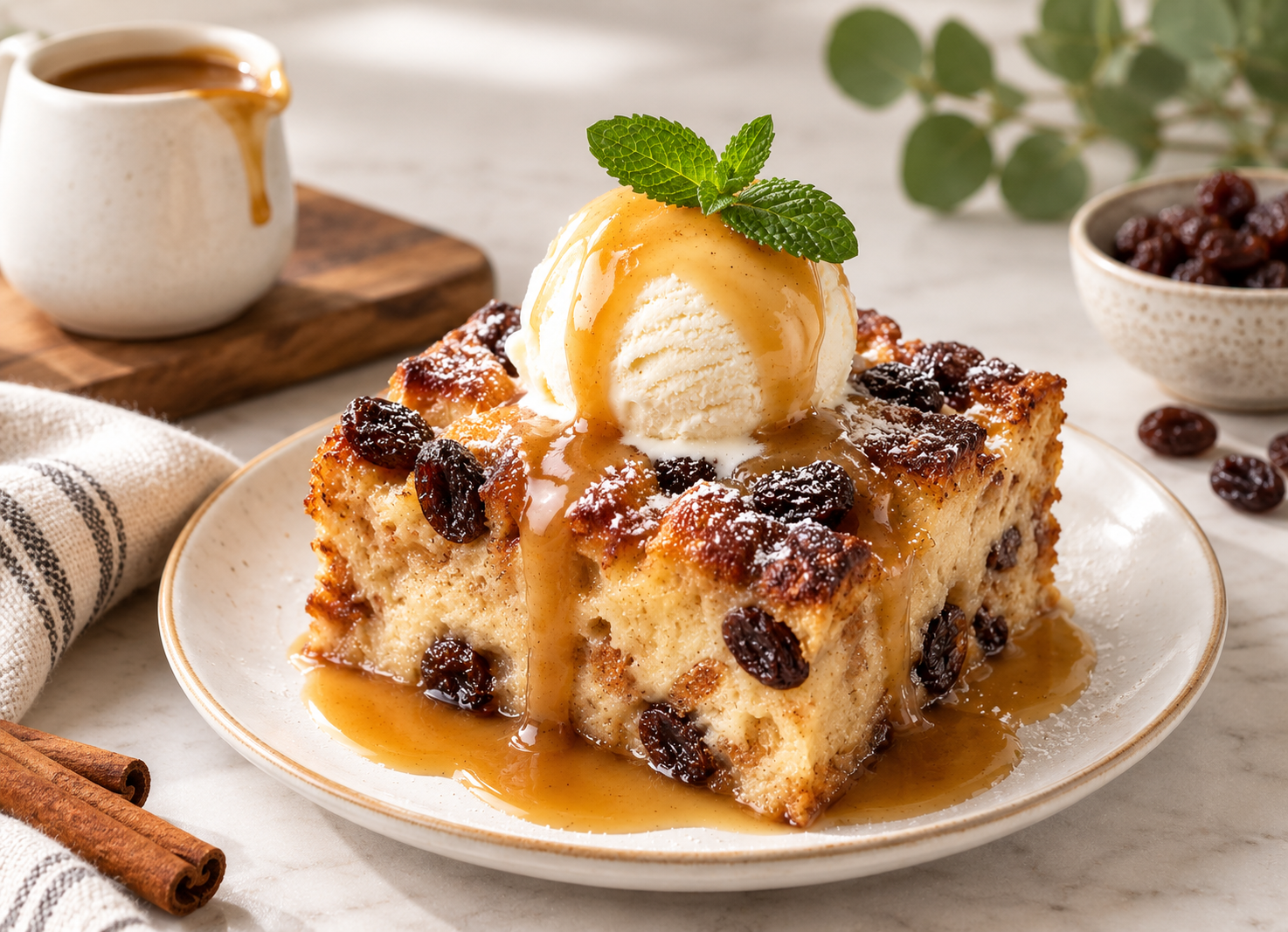
This bread pudding recipe turns simple day-old bread into a warm, rich dessert with a soft, custardy center and beautifully golden, slightly crisp edges. Every piece is soaked in a vanilla-cinnamon custard, then baked until puffed and golden.
The best part? You don’t need expensive ingredients or complicated techniques. With a few slices of leftover bread, eggs, milk, butter, sugar, and vanilla, you can make an old-fashioned bread pudding that tastes like it came from a bakery.
Serve it warm with homemade brown butter vanilla sauce, whipped cream, or a scoop of vanilla ice cream for an easy dessert everyone will want seconds of.
Why You’ll Love This Bread Pudding
There are plenty of bread pudding recipes, but this one is designed to give you the texture that makes bread pudding so good: golden edges, tender bread, and a creamy custard center without becoming soggy.
- Uses simple pantry-friendly ingredients
- Perfect for leftover or day-old bread
- Soft and custardy without turning mushy
- Golden, buttery edges
- Warm vanilla and cinnamon flavor
- Optional raisins, pecans, chocolate chips, or fruit
- Ready in about 1 hour
- Includes an easy brown butter vanilla sauce
- Great for dessert, brunch, holidays, or weekend baking
What Is Bread Pudding?
Bread pudding is a classic baked dessert made by soaking pieces of bread in a sweet egg custard and baking everything together until the custard sets.
It is one of the easiest ways to turn leftover bread into something special. The bread absorbs the milk-and-egg mixture while baking, creating a texture that is somewhere between baked French toast and a creamy custard dessert.
Traditional versions often include cinnamon, vanilla, raisins, or nutmeg. You can also customize the recipe with apples, pecans, cranberries, chocolate chips, or other ingredients you already have in your kitchen.

What Is the Best Bread for Bread Pudding?
The best bread for bread pudding is sturdy, slightly stale bread that can absorb plenty of custard without falling apart.
My favorite choices are:
Brioche
Brioche produces an especially rich and tender bread pudding because the bread is already buttery and slightly sweet.
Challah
Challah has a soft but sturdy crumb and works beautifully with vanilla-cinnamon custard.
French Bread
French bread gives the pudding more structure and creates delicious custardy pockets throughout the center.
Sourdough
Sourdough works surprisingly well if you enjoy a slightly more complex flavor. Its mild tang balances the sweetness of the custard.
Regular Sandwich Bread
You can use ordinary white bread, but it is best to dry it first. Fresh sandwich bread contains too much moisture and can produce a mushier pudding.
How to Dry Fresh Bread for Bread Pudding
Don’t have stale bread? No problem.
Cut the bread into roughly 1-inch cubes and spread them over a baking sheet.
Bake at 300°F for about 15 minutes, turning once halfway through.
You aren’t trying to toast the bread until brown. The goal is simply to remove enough moisture so the bread can absorb the custard without disintegrating.
Allow the bread to cool before continuing with the recipe.
Ingredients
For the Bread Pudding
- 8 cups day-old bread, cut or torn into 1-inch pieces
- 4 large eggs
- 2 large egg yolks
- 2 cups whole milk
- 1 cup heavy cream
- 3/4 cup granulated sugar
- 4 tablespoons unsalted butter, melted
- 2 teaspoons vanilla extract
- 1 1/2 teaspoons ground cinnamon
- 1/4 teaspoon ground nutmeg
- 1/2 teaspoon salt
- 1/2 cup raisins, optional
For the Brown Butter Vanilla Sauce
- 4 tablespoons unsalted butter
- 1/2 cup packed brown sugar
- 1/3 cup heavy cream
- 1 teaspoon vanilla extract
- Pinch of salt
Optional Add-Ins
You can customize your bread pudding with:
- Chopped pecans
- Walnuts
- Dried cranberries
- Chopped apples
- Chocolate chips
- Orange zest
- Toasted coconut
- A pinch of cardamom
How to Make Bread Pudding
1. Dry the Bread
If your bread is already stale, you can use it as-is.
If you’re using fresh bread, cut it into 1-inch cubes and dry it in a 300°F oven for approximately 15 minutes.
Let the bread cool slightly.
2. Prepare the Baking Dish
Preheat your oven to 350°F.
Butter a 9×9-inch baking dish generously.
Arrange the bread pieces inside the dish without packing them down too tightly.
Leaving a little space between the pieces allows the custard to move throughout the pudding.
3. Make the Custard
In a large bowl, whisk together:
- Eggs
- Egg yolks
- Whole milk
- Heavy cream
- Sugar
- Vanilla
- Cinnamon
- Nutmeg
- Salt
Whisk until the mixture is smooth and the sugar is mostly dissolved.
The extra egg yolks give the custard a richer, more luxurious texture without making the pudding taste strongly eggy.
4. Add the Butter
Whisk the melted butter into the custard.
This adds richness and helps create a beautifully golden top as the pudding bakes.
5. Soak the Bread
Pour the custard evenly over the bread.
Gently press the bread down with a spatula or the back of a spoon so the pieces make contact with the custard.
Don’t mash the bread.
Let it sit for 20 minutes.
This soaking step is important because it allows the center of the bread pieces to absorb the custard before baking.
If you’re adding raisins, pecans, chocolate chips, or another mix-in, sprinkle them throughout the bread while soaking.
6. Bake the Bread Pudding
Place the baking dish in the preheated oven.
Bake for approximately 45–55 minutes, or until:
- The top is golden brown
- The edges are slightly crisp
- The center is puffed
- The middle feels set but still has a slight gentle jiggle
Do not wait until the center becomes completely firm in the oven. The custard will continue setting as the bread pudding cools.
7. Let It Rest
Remove the pudding from the oven and allow it to rest for 10–15 minutes before serving.
This gives the custard time to finish setting and makes the pudding easier to portion.
How to Make Brown Butter Vanilla Sauce
While the bread pudding rests, make the sauce.
Melt the butter in a small saucepan over medium heat.
Continue cooking until the butter becomes fragrant and develops a light golden color.
Reduce the heat and carefully whisk in the brown sugar.
Add the heavy cream and salt.
Cook for 2–3 minutes, stirring frequently, until the sauce becomes smooth.
Remove from the heat and stir in the vanilla.
The sauce should be smooth and pourable.
Drizzle it over warm slices of bread pudding just before serving.

How Do You Know When Bread Pudding Is Done?
This is one of the most important parts of making bread pudding.
The pudding should look puffed and golden, while the center should be set but still slightly soft.
Gently press the center with your fingertip or the back of a spoon. It should spring back rather than feel liquid underneath.
You can also insert a knife near the center. It should come out without a stream of uncooked custard.
Avoid baking the pudding until it feels completely firm. Overbaking can cause the eggs to tighten and leave you with a dry or rubbery texture.
How to Keep Bread Pudding From Getting Soggy
Soggy bread pudding is usually caused by too much moisture, bread that is too fresh, or insufficient baking.
Follow these tips:
Use stale or dried bread
Day-old bread absorbs custard much better than fresh bread.
Don’t crush the bread
Keep the pieces relatively large so they maintain their structure.
Give the bread enough soaking time
Twenty minutes gives the custard time to penetrate the bread without turning it into a paste.
Don’t overload the custard
More liquid doesn’t automatically mean creamier bread pudding. The bread needs enough custard to become tender but enough structure to set during baking.
Bake until the center is set
The middle should not look wet or liquid when you remove the pudding from the oven.
How to Make Bread Pudding Extra Creamy
For a richer bread pudding, use whole milk and heavy cream rather than milk alone.
The combination gives the custard a silky texture while still allowing the bread to remain distinct.
Using a few egg yolks along with whole eggs also adds richness without requiring a large amount of cream.
For the richest version, use day-old brioche or challah.
Bread Pudding Variations
Once you’ve mastered the basic recipe, it’s easy to create different versions.
Apple Cinnamon Bread Pudding
Add 1 cup of peeled, diced apples and an extra 1/2 teaspoon of cinnamon.
Granny Smith or Honeycrisp apples work especially well.
Chocolate Chip Bread Pudding
Fold 3/4 cup semisweet chocolate chips into the bread before adding the custard.
Serve warm with vanilla ice cream.
Pecan Bread Pudding
Add 3/4 cup toasted chopped pecans.
The nuts add a wonderful crunchy contrast to the soft custard.
Cranberry Orange Bread Pudding
Replace the raisins with dried cranberries and add 1 teaspoon of finely grated orange zest.
This version works especially well for Thanksgiving and Christmas.
Raisin Bread Pudding
For a traditional version, use 1/2 cup raisins and keep the cinnamon and nutmeg in the custard.
You can soak the raisins in warm water for 10 minutes first to make them softer and plumper.
What to Serve With Bread Pudding
Bread pudding is delicious on its own, but the right topping makes it even better.
Try serving it with:
- Brown butter vanilla sauce
- Vanilla ice cream
- Whipped cream
- Caramel sauce
- Powdered sugar
- Fresh berries
- Warm fruit compote
- Maple syrup
For the ultimate combination, serve a warm slice with vanilla ice cream and a drizzle of brown butter sauce.
Can You Make Bread Pudding Ahead of Time?
Yes.
For the best texture, prepare the bread and custard separately and combine them shortly before baking.
If you need to prepare the entire dish in advance, assemble it, cover it tightly, and refrigerate it for several hours before baking.
Allow the chilled dish to sit at room temperature briefly while the oven preheats.
Keep in mind that a longer soaking period can produce a softer texture, so don’t leave the bread submerged in custard overnight if you prefer clearly defined bread pieces.
How to Store Bread Pudding
Allow leftover bread pudding to cool, then place it in an airtight container.
Refrigerate for up to 4 days.
For best quality, keep the sauce separate and add it after reheating.
Can You Freeze Bread Pudding?
Yes, bread pudding can be frozen.
Cut it into individual portions and wrap each piece tightly before placing the portions in a freezer-safe container.
Freeze for up to 2 months for the best quality.
Thaw overnight in the refrigerator before reheating.
How to Reheat Bread Pudding
Microwave
Place one serving on a microwave-safe plate and heat in short intervals until warm.
Don’t overheat it, or the custard can become firm and dry.
Oven
Place the bread pudding in an oven-safe dish and cover loosely with foil.
Warm at 325°F until heated through.
Remove the foil during the final few minutes if you want the edges to crisp again.
Add the warm vanilla sauce immediately before serving.
Frequently Asked Questions
What is the best bread to use for bread pudding?
Brioche, challah, French bread, and sturdy sourdough are excellent choices. The most important factor is that the bread is day-old or properly dried so it can absorb the custard without becoming mushy.
Can I make bread pudding with fresh bread?
Yes. Cut the bread into cubes and dry it in a 300°F oven for about 15 minutes before using it.
Why is my bread pudding soggy?
The most common causes are fresh bread, too much liquid, insufficient soaking control, or underbaking. Use dried bread and bake until the center is puffed and set.
Should bread pudding be covered while baking?
Generally, no. Baking it uncovered helps the top become golden and slightly crisp. If the top is browning too quickly before the center is finished, loosely cover the dish with foil.
Do I have to use raisins?
No. Raisins are completely optional. You can leave them out or replace them with dried cranberries, chopped apples, pecans, or chocolate chips.
Can I use brioche for bread pudding?
Absolutely. Brioche makes an especially rich and tender bread pudding because of its buttery texture.
Can I make bread pudding without heavy cream?
Yes. Replace the heavy cream with additional whole milk. The finished pudding will still be delicious but slightly lighter and less rich.
Why did my bread pudding turn out dry?
It was probably baked too long or the bread did not absorb enough custard. Remove the pudding once the center is set but still slightly soft.
Can bread pudding be made without raisins?
Yes. Raisins aren’t necessary for a classic bread pudding. The vanilla, cinnamon, and custard provide plenty of flavor.
Is bread pudding better warm or cold?
It’s delicious both ways, but serving it warm gives you the best contrast between the soft custardy center, golden edges, and cool vanilla ice cream or creamy sauce.
Recipe Notes
Bread: Day-old brioche, challah, French bread, or sourdough works best.
Fresh bread: Dry fresh bread at 300°F for approximately 15 minutes before using.
Soaking: Let the bread absorb the custard for about 20 minutes before baking.
Doneness: The center should be set and slightly springy, not liquid.
Resting: Let the finished bread pudding rest for 10–15 minutes before serving.
Raisins: Optional. Leave them out if you prefer a smooth, classic vanilla-cinnamon bread pudding.
Sauce: Brown butter vanilla sauce is optional but highly recommended.
Classic Bread Pudding Recipe
Prep Time: 20 minutes
Cook Time: 45–55 minutes
Resting Time: 10–15 minutes
Total Time: About 1 hour 20 minutes
Servings: 8
Course: Dessert
Cuisine: American
Ingredients
Bread Pudding
- 8 cups day-old bread, cut into 1-inch pieces
- 4 large eggs
- 2 large egg yolks
- 2 cups whole milk
- 1 cup heavy cream
- 3/4 cup granulated sugar
- 4 tablespoons unsalted butter, melted
- 2 teaspoons vanilla extract
- 1 1/2 teaspoons cinnamon
- 1/4 teaspoon nutmeg
- 1/2 teaspoon salt
- 1/2 cup raisins, optional
Brown Butter Vanilla Sauce
- 4 tablespoons unsalted butter
- 1/2 cup brown sugar
- 1/3 cup heavy cream
- 1 teaspoon vanilla extract
- Pinch of salt
Instructions
- Preheat the oven to 350°F and generously butter a 9×9-inch baking dish.
- If using fresh bread, cut it into 1-inch pieces and dry it at 300°F for about 15 minutes. Cool before using.
- Arrange the bread pieces in the prepared baking dish.
- Whisk together the eggs, egg yolks, milk, cream, sugar, vanilla, cinnamon, nutmeg, and salt.
- Whisk in the melted butter.
- Pour the custard evenly over the bread and gently press the bread down so it absorbs the liquid.
- Let the mixture stand for 20 minutes. Add raisins or other desired mix-ins.
- Bake uncovered for 45–55 minutes, until the top is golden and the center is puffed and set.
- Remove from the oven and rest for 10–15 minutes.
- Meanwhile, make the sauce by browning the butter over medium heat. Add brown sugar, cream, and salt. Cook for 2–3 minutes, then remove from the heat and stir in vanilla.
- Serve warm bread pudding with brown butter vanilla sauce, whipped cream, or vanilla ice cream.
Final Tips for the Best Bread Pudding
The secret isn’t complicated: dry bread + balanced custard + enough soaking time + careful baking.
Use sturdy bread, don’t compress the pieces, and take the pudding out of the oven while the center is still gently tender. It will continue setting as it rests.
That combination gives you the texture bread pudding should have: golden on top, tender around the edges, and creamy in the middle.